
In the hyper-dynamic economic theater of 2026, the stewardship of significant capital has moved beyond the era of passive management. For the global elite, the priority has shifted toward the creation of a "sovereign estate"—a robust, autonomous framework designed to withstand fiscal volatility and geopolitical shifts. This evolution requires a transition from generic portfolio allocation to the implementation of personalized investment strategies that treat a family's holdings as a private institution. Success in this landscape is defined by the ability to synchronize legal protections, tax-efficient structures, and physical security into a unified, high-performance architecture.
The Strategic Nexus: The Role of the Private Wealth Advisor

At the core of this institutionalized approach is the private wealth advisor, who functions not as a simple broker, but as a lead architect. In 2026, the complexity of managing cross-border assets and digital liquidity requires an advisor who can orchestrate a "unified brain" for the family’s interests. This involves coordinating a suite of wealth management services that balance liquid market participation with private equity, venture capital, and tokenized real estate. The objective is to eliminate "structural entropy"—the natural fragmentation of wealth over time—and replace it with a disciplined, centralized strategy.
By designing personalized investment strategies, the advisor ensures that every dollar is deployed with intent. This bespoke approach accounts for the family’s specific risk tolerance, philanthropic goals, and multi-generational time horizons. By professionalizing the governance of the estate, the advisor creates a platform where capital can move with agility, capturing unique opportunities in private markets while maintaining the defensive posture necessary to preserve the core legacy through turbulent cycles.
The Fiscal Engine: Efficiency via PPLI Life Insurance

In an environment of increasing global tax transparency, the "friction of ownership" has become a significant barrier to capital compounding. To mitigate this, expert wealth structuring advice frequently utilizes PPLI life insurance as a sophisticated tax-neutralization tool. This institutional-grade vehicle allows families to house high-yield, tax-inefficient assets—such as hedge fund interests or private credit—within an insurance wrapper. This fundamentally alters the tax profile of the underlying investments, allowing gains to accrue on a tax-deferred basis.
The primary advantage of PPLI life insurance is the elimination of annual tax drag, which dramatically enhances the velocity of internal compounding. Over a multi-decade horizon, the difference in terminal value between a taxable portfolio and one held within a PPLI structure can be staggering. Furthermore, the eventual death benefit typically passes to the next generation income-tax-free. This provides a clean, efficient mechanism for wealth transfer that circumvents many of the regulatory hurdles associated with traditional trust structures in 2026.
Enterprise Fortification: Advanced Business Insurance Solutions

Since a family’s primary source of wealth is often a closely held corporation or a specialized operating entity, the integrity of that business is synonymous with the security of the estate. Protecting this engine requires the implementation of advanced business insurance solutions that function as "operational armor." These tools are designed to mitigate risks that could derail a private enterprise, such as the sudden loss of a visionary leader or a destabilizing dispute among equity holders that threatens corporate liquidity.
Strategic continuity is maintained through the use of funded buy-sell arrangements and key-person indemnification, which provide the immediate capital needed to stabilize the organization during a leadership vacuum. By treating business insurance solutions as a critical pillar of the broader wealth plan, families ensure that a professional crisis at the corporate level remains an isolated event. This prevents corporate liabilities from bleeding into the personal balance sheet, allowing the business to continue its growth trajectory undisturbed by the family's personal estate transitions.
The Operational Sanctuary: Sovereignty in Private Office Spaces
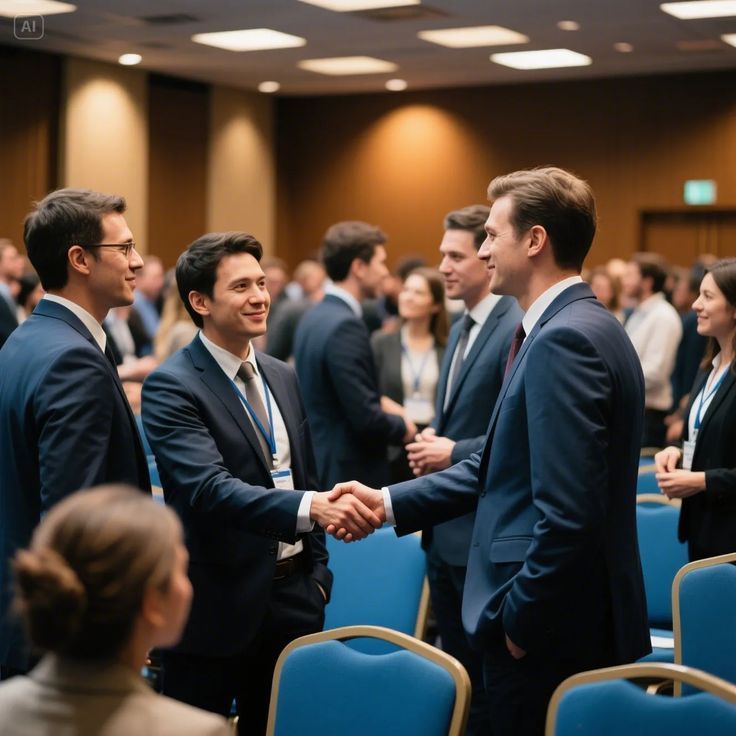
To manage a global, multi-layered estate with total discretion, the physical environment of decision-making has become a vital security factor. The rise of dedicated private office spaces for family operations reflects a move toward total operational sovereignty. These are not mere workspaces; they are fortified command centers where the family’s internal administrative team and their private wealth advisor can collaborate in a controlled, confidential environment shielded from third-party service providers and public scrutiny.
By establishing proprietary private office spaces, families can implement bespoke cybersecurity and physical security protocols that are not available in shared professional buildings. These sanctuaries serve as the "war room" for the estate, where sensitive strategic discussions—whether regarding an international merger or a delicate succession plan—are conducted in absolute privacy. In the hyper-transparent world of 2026, the ability to control the physical geography of one’s information is the final tier of asset protection, ensuring that the family’s strategic playbook remains shielded from competitive or regulatory prying.
Engineering the Future: A Unified Vision
The ultimate strength of an estate is found in the total integration of these disparate elements. When wealth management services provide the strategic roadmap and PPLI life insurance provides the tax-neutral fuel, the family is positioned for maximum capital velocity. This is further reinforced by robust business insurance solutions and the operational sanctuary of private office spaces. By aligning these pillars through expert wealth structuring advice, a family can move through the 21st century with the confidence that their legacy is not just surviving, but actively flourishing under its own engineered governance.